(And why that’s the whole point)
Expedition ships don’t limit passenger numbers to feel exclusive.
They do it to stay faithful to the places they visit.
In the polar regions, remote islands, and fragile ecosystems at the edges of the map, access is a privilege, one governed by nature, not convenience. Organizations like IAATO set strict guidelines to protect environments that cannot absorb crowds, noise, or carelessness. Smaller ships simply move more responsibly through these spaces.
But there’s another reason, one that travelers feel immediately.
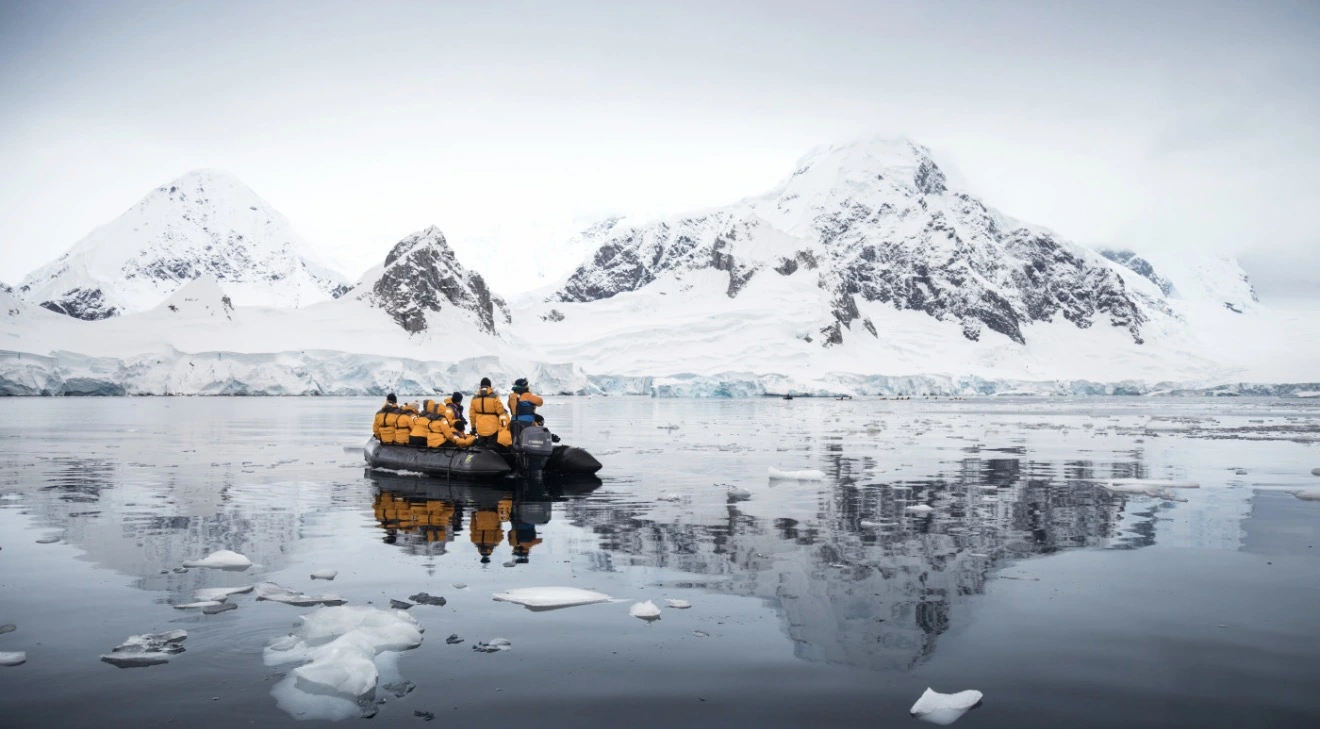
With fewer guests onboard, you’re not waiting in long lines to step ashore. You’re not listening to instructions through a loudspeaker from the back of a crowd. You’re stepping into a Zodiac with a handful of fellow explorers, guided by naturalists who know your name and have time to answer your questions.
Limited numbers mean:
More time ashore
More spontaneous landings
More meaningful conversations with experts
More room to observe, reflect, and understand
It’s the difference between visiting a place and being introduced to it.
Expedition travel isn’t about scale. It’s about stewardship. It’s about moving lightly, listening closely, and leaving places as pristine as you found them, if not better understood.
That’s why ships from companies like National Geographic–Lindblad Expeditions and Ponant keep their numbers intentionally low. Not because they can’t take more people, but because they won’t.
This is travel that values quality over quantity.
Presence over performance.
Depth over bragging rights.
And for the right traveler, that quiet restraint is exactly what makes the journey extraordinary.
If crowds no longer appeal and the edges of the map still call to you, expedition travel may be exactly what you’ve been waiting for.
